A Feng Shui cleansing ritual is a traditional way of refreshing the atmosphere of your home and creating a sense of order, intention, and renewal.
It may combine ordinary cleaning and decluttering with symbolic practices such as opening windows, using sound, salt, light, fragrance, and setting an intention.
You don’t need to perform an elaborate Feng Shui ritual every day. A simple weekly routine can help you reset your space after a busy week, visitors, arguments, illness, moving, or periods when the home simply feels cluttered or stale.
In this guide, you’ll learn a practical Feng Shui energy clearing routine, when to cleanse your house, how to cleanse Feng Shui items, and which practices are optional rather than essential.

Quick Answer: How Do You Do a Feng Shui Cleansing Ritual?
A simple Feng Shui house cleansing can begin with physical cleaning: remove clutter, empty trash, open windows when weather and air quality permit, and clean frequently used surfaces. You can then add traditional or symbolic energy-clearing practices such as ringing a bell, clapping, using a bowl of salt, turning on warm lighting, or setting a positive intention.
There is no single mandatory Feng Shui cleansing ritual. Methods vary by tradition, household, and personal preference, so choose practices that are safe and meaningful for your space.
What Is Feng Shui Cleansing and Why Is It Practiced?
Feng Shui cleansing or Feng Shui energy clearing generally refers to practices intended to refresh stagnant or uncomfortable-feeling spaces. Some methods are practical—cleaning, decluttering, ventilation, and organization—while others are traditional or symbolic, such as sound cleansing, salt, incense, candles, or intention-setting.
People may choose to perform a Feng Shui clearing ritual after moving into a home, after guests leave, following an argument, during seasonal cleaning, or simply as part of a weekly home-care routine.
These practices are part of Feng Shui and related cultural/spiritual traditions. Claims that they literally remove negative energy or directly improve health, money, or relationships are not scientifically established.
Weekly cleansing gives your home a “reset button.” Just like dust returns, energetic residue accumulates from:
- Daily stress
- Phone/laptop radiation
- Clutter
- Negative conversations
- Visitors with heavy energy
- Work pressure
- Arguments or emotional triggers
Here’s a quick comparison showing the difference between a cleansed and uncleansed home:
| Home State | What You May Notice | Practical Reset |
|---|---|---|
| Fresh & organized | Open, comfortable atmosphere | Maintain regular cleaning |
| Cluttered | Visual overload, difficult movement | Declutter one zone at a time |
| Stuffy | Stale air or lingering odors | Ventilate when appropriate |
| Visually chaotic | Too many items competing for attention | Simplify surfaces and storage |
| After a stressful event | Room may feel emotionally uncomfortable | Clean, ventilate and reset the space |
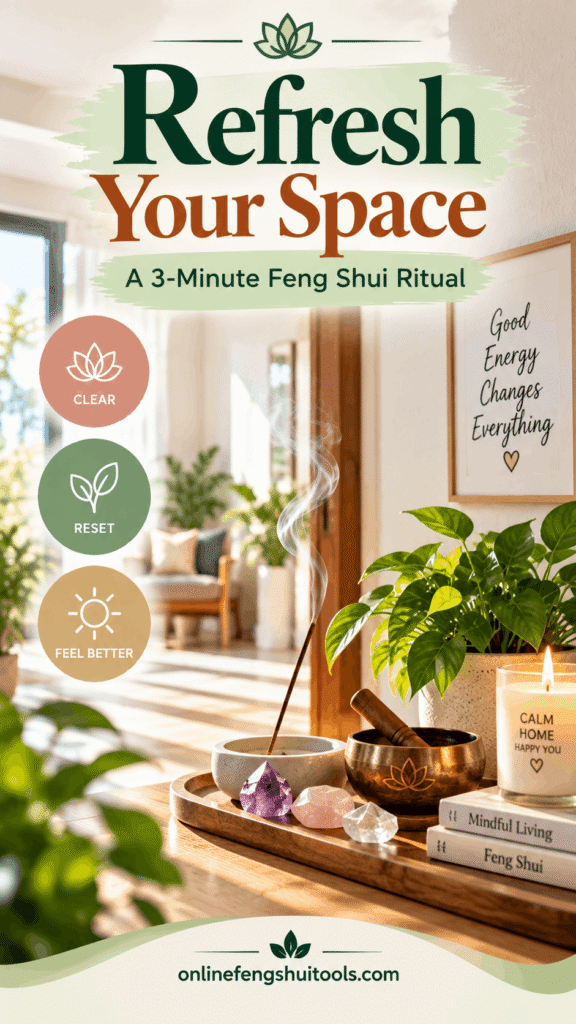
The 7-Step Feng Shui Weekly Energy Cleansing Ritual (Simple + Powerful)
These steps are easy even for busy people. The whole routine takes 15–20 minutes.
1. Open All Windows for 3 Minutes
This releases stale Qi. Even in winter, open windows briefly to invite fresh oxygen and new life force.
Tip: If you live in a cold climate, open only one window per room for a short burst—enough to shift the energy.
2. Do a Quick Clutter Sweep
Clutter blocks Qi and causes mental fog. Remove:
- Empty packaging
- Old receipts
- Expired pantry items
- Laundry piles
- Unused cables
- Plastic bags
If you’re short on time, do a 5-minute zone detox, targeting only one area each week: kitchen counters, bedside table, entryway, or workspace.
3. Try a Traditional Salt Cleansing Practice
Salt is used symbolically in various cleansing traditions. In Feng Shui practice, some people use salt-based remedies as part of an intentional space-clearing routine.
You can use three methods:
a) Bowl Method
Place a bowl of salt in:
- Entryway
- Bathroom (top wealth drain area)
- Living room corner
b) Floor Wash
Surface caution: Don’t add salt to floors unless you know the flooring material tolerates it. Salt and moisture can damage or leave residue on some wood, stone, metal, grout, and finished surfaces.
Learn the full process from this supportive guide on Feng Shui Salt Remedy.
4. Use Light to Change the Atmosphere
In Feng Shui symbolism, light is associated with active, Yang qualities. Practically, good lighting can also make a dark or gloomy room feel brighter and more inviting.
Try a table lamp, floor lamp, LED candle, or real candle where permitted and safe. Himalayan salt lamps can be used for their warm decorative glow, but don’t rely on them as air purifiers.
Here are excellent options hidden inside the text:
Choose whichever fits your space and lifestyle. Candles can create a warm atmosphere, Himalayan salt lamps provide decorative ambient light, and LED flame lamps are a flame-free alternative.
5. Use Sound as a Traditional Energy-Clearing Practice
Bells, singing bowls, clapping, or music are sometimes incorporated into Feng Shui energy-clearing rituals. From a practical perspective, sound can also change how a space feels and influence its atmosphere. This doesn’t establish that sound literally removes negative energy.
In traditional space-clearing practices, some people pay particular attention to quiet or neglected corners of a room.
You can read more about this technique in this helpful article which explains how sound elevates home vibrations.
6. Refresh the Space With Natural Fragrance
Fragrance can be used as a sensory part of a cleansing ritual, but it isn’t required for Feng Shui clearing.
Options:
- Fresh citrus peel
- Cinnamon
- Lavender
- Sandalwood
- Incense
- A diffuser, if appropriate for your household
Safety tip: Ventilate when burning incense or candles, never leave flames unattended, and consider children, pets, asthma, allergies, and fragrance sensitivities when choosing scented products.
7. Seal Fresh Energy With an Intention
Once the space is cleared, speak or think an intention like:
- “My home attracts peace and abundance.”
- “My space is protected and energized.”
- “I invite clarity, love, and financial flow.”
Say it softly while walking around your living space.

Before we get into the steps, here are helpful internal resources you can use to personalize your cleansing routine:
- Find your personal elements with the Five Element Calculator
- Identify your home’s wealth & problem areas using the Flying Stars Calculator
- Understand your space’s energy flow through the Bagua Map Tool
- Read a detailed home cleansing guide on Feng Shui Energy Clearing
Weekly Cleansing Checklist
Here’s a practical table to keep your routine on track:
| Task | Time | Purpose |
|---|---|---|
| Open windows | 3 min | Refresh the room |
| Clutter sweep | 5 min | Reduce visual clutter |
| Optional salt ritual | 2 min | Traditional symbolic practice |
| Improve lighting | 1 min | Brighten the atmosphere |
| Sound ritual | 3 min | Traditional space-clearing practice |
| Add fragrance | 2 min | Refresh the sensory atmosphere |
| Set intention | 1 min | Finish the ritual mindfully |
Total time: 17 minutes
What Is the Best Day to Clean Your House in Feng Shui?
There is no single best day to clean a house in Feng Shui that applies universally to everyone.
For ordinary cleaning and decluttering, choose a day that fits your schedule and allows you to complete the task without rushing. A consistent weekly cleaning routine is generally more practical than waiting for a particular weekday.
Some traditional practitioners choose auspicious dates for major events or important household activities using the Chinese calendar, but that is different from saying every Monday, Thursday, or Saturday is automatically a lucky Feng Shui cleaning day.
When Might You Do a Feng Shui House Cleansing?
Consider cleansing or refreshing your space:
- After moving into a new home
- After a large gathering
- After an argument or stressful period
- During seasonal cleaning
- Before an important new beginning
- When decluttering
- When a room has been unused for a long time
- Whenever the home simply feels stale or disorganized
How to Cleanse Feng Shui Items
If you use crystals, coins, statues, wealth bowls, bells, figurines, or other symbolic objects, start with ordinary physical cleaning appropriate for the material.
Simple Feng Shui Item Cleansing Method
- Remove visible dust with a soft cloth.
- Check the manufacturer’s care instructions.
- Place the object in a clean, uncluttered location.
- If meaningful to you, ring a bell nearby or use another symbolic cleansing practice.
- Reposition the item intentionally after cleaning.
Avoid automatically soaking Feng Shui objects in salt water. Salt, moisture and sunlight can damage certain crystals, metals, wood, paint, finishes, fabrics and decorative objects.
Feng Shui House Cleansing When Moving Into a New Home
Before arranging symbolic Feng Shui objects in a new home, begin with the basics:
- Clean the rooms thoroughly.
- Remove rubbish or items left by previous occupants.
- Ventilate the home when conditions permit.
- Clean windows and entry areas.
- Repair obvious maintenance problems.
- Set up the bed and essential furniture.
- Add your preferred symbolic cleansing ritual afterward.
For renters, check your lease before burning incense, using candles, hanging objects, or making permanent alterations.
How to Cleanse Different Spaces
Every part of your home holds different energy. Here’s how to target them:
Bedroom
- Declutter bedside surfaces
- Use comfortable lighting
- Wash bedding regularly
- Ventilate when practical
Bathroom
Use:
- Keep dry and ventilated
- Empty trash
- Clean surfaces
- Repair leaks
- Organize toiletries
Kitchen
- Clean stove
- Clear countertops
- Remove expired food
- Clean refrigerator
- Empty trash
Entryway
- Remove shoe clutter
- Improve lighting
- Clean the door/mat
- Keep the path clear
Living Room
- Clean neglected corners
- Open curtains
- Maintain plants
- Organize storage
- Remove broken/unwanted items
For deeper layout guidance, check the Lucky Direction Calculator to find your personal energy zones.
Adding Plants for Weekly Energy Renewal
Plants bring wood element energy—growth, renewal, and upward Qi.
Plants for a Fresh, Lively Home
Healthy indoor plants can introduce natural texture, color, and Wood-element symbolism into a Feng Shui-inspired home.
- Money plant
- Jade plant
- Peace lily
- Areca palm
- Snake plant
If you have pets or young children, check the safety of a plant before bringing it into your home.
For specific wealth-enhancing plant tips, explore Feng Shui Plants Guide.
Signs Your Home May Be Ready for a Reset
Consider a cleaning and Feng Shui clearing session when you notice:
- Clutter accumulating
- Stale or unpleasant odors
- Dust building up
- Crowded countertops
- An overflowing entryway
- Dead or unhealthy plants
- Broken objects waiting for repair
- Rooms you continually avoid using
- Poor lighting
- Furniture blocking comfortable movement
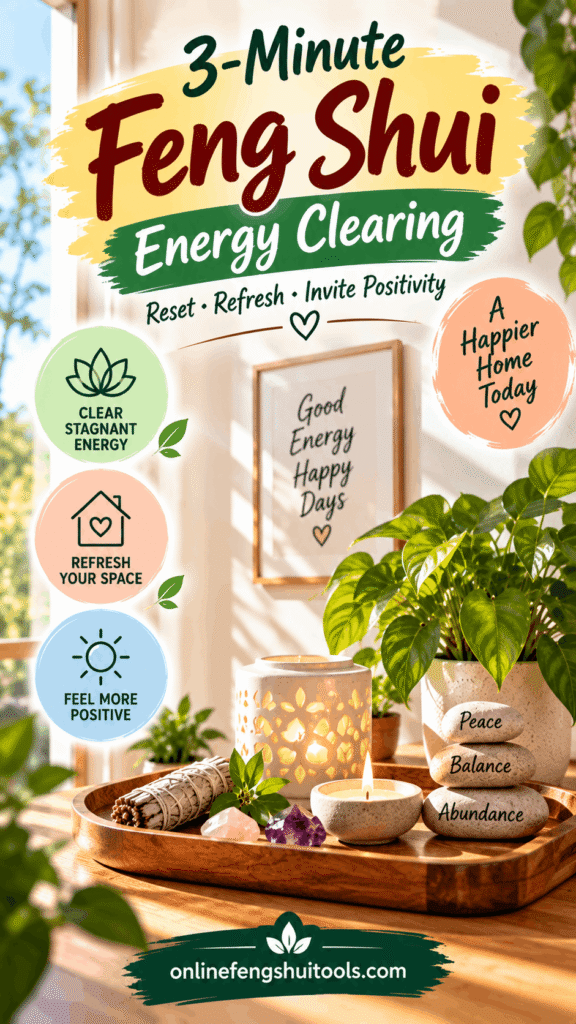
Bonus: 3-Minute Feng Shui Energy Clearing for Busy Days
When you don’t have time for the full ritual:
Minute 1: Open curtains and ventilate the room if conditions allow.
Minute 2: Clear clutter from one visible surface.
Minute 3: Use sound, switch on a warm light, or pause to set an intention for the space.
A quick reset won’t replace regular household cleaning, but it can be a simple way to make a busy room feel more intentional.
Feng Shui Cleansing Ritual FAQs
What Is a Feng Shui Cleansing Ritual?
A Feng Shui cleansing ritual is a space-refreshing practice that may combine physical cleaning and decluttering with traditional or symbolic methods such as sound, salt, light, fragrance and intention.
How Often Should You Do Feng Shui Cleansing?
There is no mandatory schedule. Some people enjoy a weekly routine, while others perform Feng Shui house cleansing after moving, entertaining guests, decluttering, or during seasonal cleaning.
What Is the Best Day to Clean a House According to Feng Shui?
There isn’t one universally required weekday for ordinary Feng Shui cleaning. For everyday household cleaning, consistency and practicality matter more than waiting for a particular weekday.
How Do You Clear Negative Energy in Feng Shui?
Traditional Feng Shui energy clearing may involve decluttering, ventilation, sound, salt, light and intention. These practices should be understood as traditional or symbolic methods rather than scientifically proven ways of removing a measurable form of “negative energy.”
How Do You Cleanse Feng Shui Items?
Start by physically cleaning the item according to its material and care instructions. If desired, follow with a symbolic practice such as sound or intention. Avoid salt, water, smoke or direct sunlight unless you know the object can safely tolerate them.
Can You Do Feng Shui Cleansing Without Incense?
Absolutely. Incense isn’t necessary. You can declutter, clean, open curtains, ventilate appropriately, use sound, improve lighting or simply set an intention.
Should You Clean Before a Feng Shui Ritual?
Yes. Physical cleaning and decluttering should generally come first. Symbolic practices are better treated as additions rather than replacements for ordinary cleaning.
Read more feng shui related fixes and blogs
- Feng Shui Remedies for Homes With No Entry Foyer
- Best Feng Shui Colors for North-Facing Homes in Western Countries (USA, UK, Canada)
- How to Feng Shui Wallet for Daily Money Flow
- Feng Shui Front Door Fixes for Narrow Hallways (Western Laouts)
- Feng Shui Rules for Renting Apartments in the U.S. & Canada
- Feng Shui Bedroom Mistakes Western Homes Commonly Make
Final Thought
A Feng Shui cleansing ritual can be a simple way to regularly clean, declutter, refresh, and reconnect with your home. Start with practical cleaning, then add traditional practices such as sound, salt, light, fragrance, or intention if they are meaningful to you.
Whether you perform Feng Shui energy clearing every week or only when your home needs a reset, the goal is simple: create a space that feels clean, organized, comfortable, and intentional.