
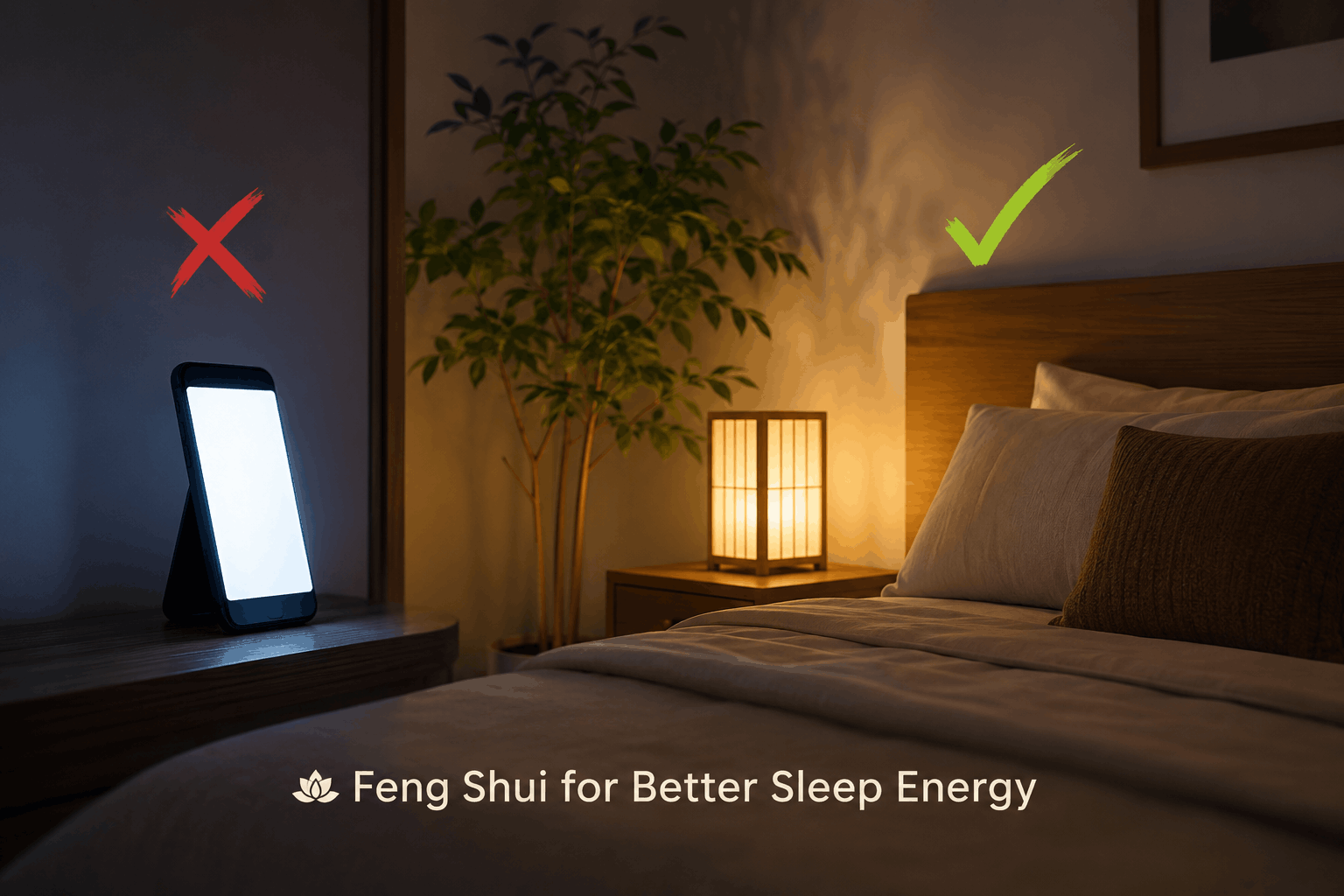
After a long day, most of us reach for our phones without even thinking about it. We scroll through social media, answer messages, watch videos, or catch up on the latest news before turning off the lights. It has become such a normal part of our evening routine that we rarely question how it affects our home or our sleep.
From a Feng Shui perspective, your bedroom should be the calmest room in the house. It is where your body and mind recharge. However, modern bedrooms are now filled with glowing screens, smartwatches, televisions, charging cables, tablets, laptops, and constant notifications that can make it difficult to truly relax.
The goal isn’t to eliminate technology completely. Instead, it’s about creating a better balance between convenience and a peaceful environment. Small changes to your evening habits and bedroom setup can make a surprising difference in how your space feels.
In this guide, I’ll share practical Feng Shui tips for screen time and sleep energy, common mistakes that quietly disturb bedroom harmony, and simple ways to create a more restful environment.
Quick Answer
Yes, excessive screen time and poorly placed electronics can negatively affect your bedroom’s energy according to Feng Shui. While traditional Feng Shui doesn’t specifically discuss smartphones or tablets, it emphasizes creating a calm, uncluttered, and restorative space. Reducing screen use before bed, limiting electronics near your sleeping area, and organizing charging stations can help create a bedroom that feels more peaceful and supports better rest.
What Is Feng Shui for Screen Time & Sleep Energy?
Traditional Feng Shui was developed centuries before smartphones, streaming services, and wireless technology existed. Yet its central philosophy remains surprisingly relevant today.
At its core, Feng Shui encourages us to create spaces that support our well-being rather than constantly stimulating our minds. Your bedroom should feel noticeably different from your office or entertainment room. It should invite stillness, comfort, and recovery.
Modern technology often works against that goal. Bright screens, endless notifications, and electronic clutter (also read Feng Shui for Smart Home Devices) keep our attention active long after the day is over. Even when the room looks tidy, it can still feel mentally “busy.”
I noticed this in my own routine a few years ago. My phone stayed beside the bed every night because I used it as an alarm clock. Before sleeping, I would spend “just five minutes” checking emails or watching short videos. Those five minutes regularly turned into thirty or forty-five.
When I finally moved the phone to a dresser across the room and stopped charging it beside the bed, I found it much easier to disconnect mentally. The bedroom felt quieter, even though nothing else had changed. That simple adjustment reminded me that good Feng Shui often begins with small, intentional habits rather than expensive décor.
“A peaceful bedroom isn’t created by buying more things—it’s created by removing the distractions that quietly steal your attention.”
Why Your Bedroom Energy Matters
In Feng Shui, the bedroom represents:
- Rest
- Healing
- Relationships
- Personal energy
- Emotional balance
Because we spend nearly one-third of our lives sleeping, the quality of this environment has a lasting influence on how refreshed and focused we feel each day.
When electronic devices dominate the room, they can compete with the peaceful atmosphere the bedroom is meant to provide.
The Hidden Problem Most People Never Notice
Many people believe the biggest bedroom mistake is leaving the television on overnight.
In reality, the hidden problem is constant stimulation.
Think about what usually happens before bed.
- One message arrives.
- You reply.
- Another notification appears.
- You check social media.
- You watch one more video.
- Suddenly, an hour has passed.
From a Feng Shui perspective, this creates a room associated with activity instead of restoration.
The issue isn’t simply the device itself—it’s the habit that comes with it.
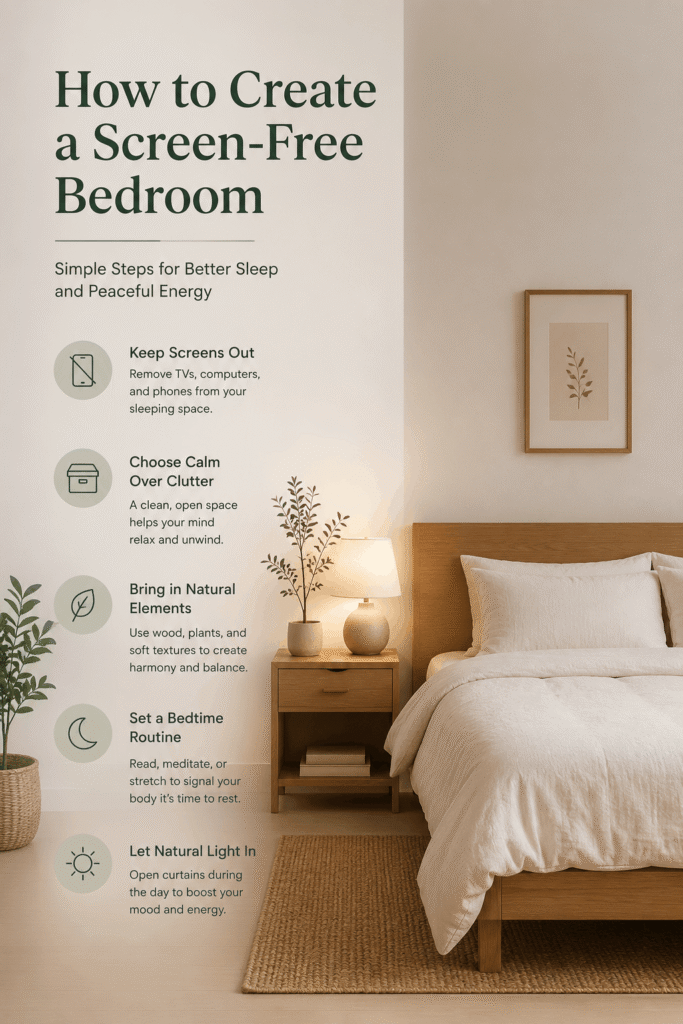
How Screens Influence Sleep Energy
Although Feng Shui describes energy differently from modern science, both encourage creating an environment that supports relaxation.
Screens contribute to a more active atmosphere by:
- Filling the room with bright artificial light.
- Encouraging mental stimulation.
- Creating visual clutter with cables and chargers.
- Turning the bedroom into a workspace or entertainment center.
- Interrupting peaceful evening routines.
A bedroom should send one clear message to your mind: This is a place to rest.
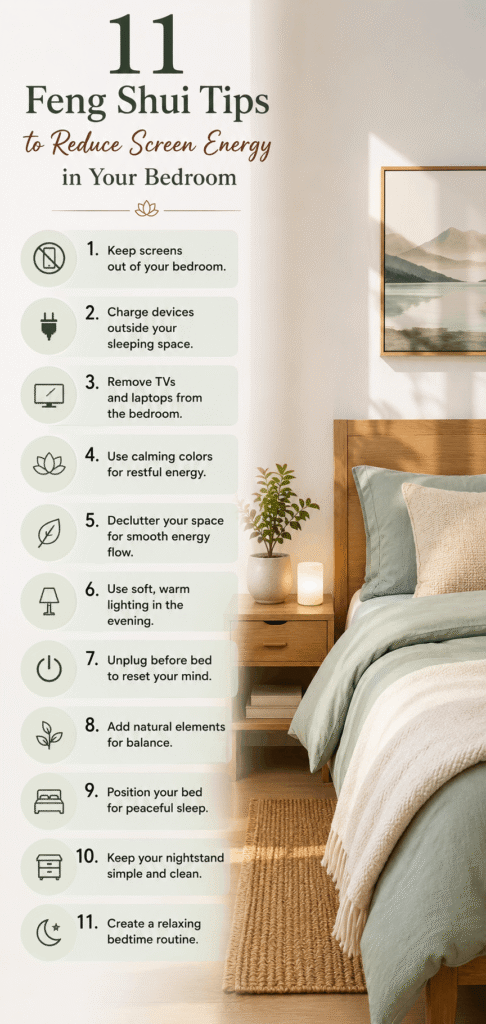
11 Feng Shui Tips to Reduce Screen Energy in Your Bedroom
The goal isn’t to throw away your phone or remove every electronic device from your home. Instead, it’s about creating a bedroom where technology supports your lifestyle without becoming the center of it.
Here are the most effective Feng Shui tips for screen time and sleep energy that I personally recommend.
1. Keep Your Phone Away From Your Bed
One of the simplest improvements you can make is moving your phone away from your pillow.
Many people sleep with their phone only inches from their head. Besides encouraging late-night scrolling, it also makes checking notifications the first thing you do every morning.
Instead:
- Place your phone on a dresser.
- Use a bedside clock if possible.
- Charge your phone across the room.
This small change creates a healthier boundary between rest and digital activity.
“The farther your phone is from your pillow, the easier it becomes to reconnect with yourself instead of your notifications.”
2. Avoid Charging Multiple Devices Beside the Bed
Look around your nightstand.
You may find:
- Phone charger
- Smartwatch charger
- Tablet
- Earbuds
- Laptop charger
While each item seems harmless, together they create unnecessary clutter.
Feng Shui values open, clean surfaces because they encourage smoother energy flow.
Keep only essential items beside your bed.
3. Remove the Television From the Bedroom
This is one of the oldest Feng Shui recommendations.
A television naturally encourages activity.
Instead of helping your bedroom feel peaceful, it constantly reminds your brain of entertainment.
If removing it isn’t practical:
- Cover it when not in use.
- Avoid falling asleep with it on.
- Keep it opposite the bed rather than beside it.
4. Create a Technology-Free Zone
Your bedroom doesn’t need to become a mini office.
Avoid bringing:
- Work laptops
- Extra monitors
- Gaming consoles
- Office equipment
I learned this lesson after working from home for several months.
My laptop stayed open on a desk beside the bed, even after work ended. Every time I looked at it, my brain immediately started thinking about unfinished emails and tomorrow’s tasks.
Once I moved my work setup into another room, my evenings felt noticeably calmer.
Sometimes the biggest Feng Shui improvement comes from removing something—not buying something new.
5. Keep Cables Hidden
Visible cables create visual clutter.
Even a beautifully decorated bedroom can feel messy when chargers stretch across furniture.
Simple cable organizers make a surprisingly big difference.
Hide:
- Charging wires
- Extension cords
- TV cables
- Power strips
The room immediately feels cleaner.
6. Use Warm Lighting at Night
Bright white lighting keeps the room feeling active.
Instead, choose:
- Warm bedside lamps
- Soft LED lighting
- Dim lighting before sleep
Gentle lighting helps signal that it’s time to unwind.
7. Stop Endless Evening Scrolling
This is probably the most difficult habit to change.
We’ve all said,
“I’ll check one more thing.”
Twenty minutes later we’re still scrolling.
I started setting a personal rule.
When my evening lamp turned on, social media turned off.
The first few nights felt strange.
Within a week, I found myself reading more, sleeping earlier, and waking up feeling less mentally exhausted.
Small routines often create bigger changes than dramatic bedroom makeovers.
8. Let Natural Light Reset the Room Every Morning
Good Feng Shui isn’t only about bedtime.
Morning matters too.
Open:
- Curtains
- Windows
- Blinds
Fresh air and sunlight help refresh the room after a night’s sleep.
Natural light also prevents your bedroom from feeling heavy or stagnant.
9. Choose One Place for Charging Devices
Instead of charging electronics throughout the bedroom, create one organized charging station.
This could be:
- A dresser
- A shelf
- A cabinet
Keeping everything together reduces clutter and prevents tangled cables from spreading across the room.
10. Balance Electronics With Natural Elements
Technology represents modern living.
Nature restores balance.
Add a few calming elements such as:
- Healthy indoor plants
- Natural wood furniture
- Cotton bedding
- Linen curtains
- Stone décor
- Bamboo accessories
These textures soften the appearance of electronics and make the room feel warmer.
11. Create a Simple Screen-Free Wind-Down Routine
The final thirty minutes before bed shape how your bedroom feels.
Instead of endless scrolling, try:
- Reading a book
- Gentle stretching
- Meditation
- Journaling
- Soft instrumental music
- Deep breathing
These activities help your bedroom become associated with relaxation rather than stimulation.
Bedroom Electronics: Good vs Bad Feng Shui Habits
| Better Habit | Habit to Avoid |
|---|---|
| Charge your phone across the room | Charge your phone under your pillow |
| Use warm bedside lighting | Bright white lights before bed |
| Keep only essential electronics | Fill the bedroom with multiple devices |
| Hide charging cables | Leave cords scattered across the room |
| Open curtains every morning | Keep the room dark all day |
| Read or meditate before bed | Scroll social media until you fall asleep |
| Keep work devices elsewhere | Store laptops and office equipment beside the bed |
Can Smart Devices Still Have Good Feng Shui?
Absolutely.
Modern technology isn’t the enemy.
In fact, many smart devices can improve your home when used intentionally.
Examples include:
- Smart lighting that dims automatically in the evening.
- Automated curtains that open with morning sunlight.
- White-noise speakers for relaxation.
- Air-quality monitors.
- Smart thermostats that maintain a comfortable sleeping temperature.
The key is using technology to support rest—not interrupt it.
Pair Your Bedroom With Personalized Feng Shui Tools
Every bedroom is different.
To create a space that matches your personal energy, use:
- Kua Number Calculator to discover your favorable sleeping directions.
- Lucky Direction Calculator before positioning your bed.
- Bagua Map Tool to identify your bedroom’s energy areas.
- Compass Tool to verify room orientation.
- Five Elements Calculator to understand which element should be strengthened in your bedroom.
These tools help personalize your Feng Shui rather than relying only on general recommendations.
Common Myths About Screen Time and Feng Shui
As technology becomes part of everyday life, many myths about Feng Shui and electronics continue to spread online. Some are based on traditional principles, while others are exaggerated or simply inaccurate.
Let’s separate fact from fiction.
Myth 1: Phones Create Bad Feng Shui
Not exactly.
Your smartphone isn’t automatically “bad energy.”
The bigger issue is how it changes your habits.
If your phone keeps you awake, creates clutter, or distracts you from relaxing, it can affect the peaceful atmosphere Feng Shui encourages.
The device isn’t the problem—the routine often is.
Myth 2: Every Electronic Device Must Be Removed
This isn’t practical for most modern homes.
Many people use:
- Alarm clocks
- Air purifiers
- Smart lighting
- White-noise speakers
- Smart thermostats
These devices can comfortably exist in a Feng Shui bedroom when they’re organized and used with intention.
Balance has always been one of Feng Shui’s guiding principles.
Myth 3: Wi-Fi Automatically Creates Negative Energy
Traditional Feng Shui does not discuss Wi-Fi because it didn’t exist when these principles were developed.
Instead of focusing on invisible technology alone, Feng Shui encourages reducing overall distractions, visual clutter, and unnecessary stimulation.
A calm bedroom is far more important than obsessing over every electronic signal.
What Modern Sleep Research Says
Although Feng Shui and modern science come from different perspectives, they often point toward similar habits.
Sleep researchers commonly recommend:
- Reducing screen time before bed
- Keeping a consistent bedtime
- Using dim lighting in the evening
- Avoiding mentally stimulating activities before sleeping
- Creating a comfortable sleep environment
These recommendations naturally align with Feng Shui’s emphasis on creating peaceful, restorative spaces.
According to a National Sleep Foundation consensus statement, screen use before bedtime—especially engaging or interactive content—can interfere with healthy sleep by increasing alertness and delaying bedtime. The review also found that reducing evening screen use and adopting healthy bedtime routines may help improve sleep quality. These findings complement Feng Shui’s goal of creating a peaceful, restorative bedroom environment.
Rather than viewing technology as the enemy, both approaches encourage using it more intentionally.
My Personal Experience
One habit changed my evenings more than I expected.
Instead of taking my phone to bed, I began leaving it on a dresser across the room every night. At first, I caught myself reaching toward the empty nightstand without thinking. It made me realize how automatic the habit had become.
Within a week, something interesting happened. I started falling asleep faster, not because my bedroom had changed dramatically, but because my mind wasn’t waiting for “just one more notification.”
That experience reminded me that good Feng Shui often isn’t about buying new décor or following complicated rules. Sometimes it’s simply removing the small distractions that quietly steal your attention every evening.
Expert Insight
Many interior designers who incorporate Feng Shui principles agree that a bedroom should encourage rest rather than constant activity.
Design consultant Anjie Cho, a well-known Feng Shui educator, often emphasizes that bedrooms work best when they feel calm, uncluttered, and intentionally designed for sleep instead of multitasking. While technology is part of modern life, reducing unnecessary electronics and creating visual simplicity can help make the space feel more restorative.
Create an Evening Feng Shui Routine
Your bedroom doesn’t need a complete makeover.
Instead, focus on building a simple evening routine that supports better sleep.
Try this 20-minute routine:
| Time | Activity |
|---|---|
| 20 minutes before bed | Turn off social media and emails |
| 15 minutes before bed | Dim lights or switch to warm lighting |
| 10 minutes before bed | Place your phone on the charging station away from the bed |
| 5 minutes before bed | Read a book, journal, meditate, or practice deep breathing |
| Bedtime | Keep the bedroom quiet, uncluttered, and free from unnecessary distractions |
Consistency matters far more than perfection.
Common Bedroom Mistakes to Avoid
Even beautifully decorated bedrooms sometimes include habits that reduce comfort and relaxation.
Avoid these common mistakes:
- Sleeping with your phone under your pillow.
- Keeping work laptops open beside the bed.
- Charging several devices on your nightstand.
- Leaving television screens on overnight.
- Allowing tangled charging cables to collect around the room.
- Using bright overhead lighting immediately before sleep.
- Turning the bedroom into a workspace.
Small improvements in these areas can make the room feel noticeably calmer.
FAQs Feng Shui screen time
Is it bad Feng Shui to sleep next to your phone?
Keeping your phone directly beside your pillow isn’t considered ideal. Moving it a few feet away helps reduce distractions and supports a more peaceful bedtime routine.
Can I have a television in my bedroom?
Yes, but Feng Shui generally recommends limiting televisions in sleeping spaces. If you keep one, avoid falling asleep with it on and consider covering it when it’s not in use.
Does Feng Shui say screens cause poor sleep?
Traditional Feng Shui doesn’t specifically discuss smartphones or tablets. However, it does emphasize creating calm, uncluttered spaces that support rest, which aligns with reducing unnecessary screen use before bed.
Where should I charge my phone according to Feng Shui?
A dresser, shelf, or dedicated charging station away from the bed is usually a better choice than placing it on your nightstand.
Are smart lights good for bedroom Feng Shui?
Yes. Warm, dimmable lighting can help create a relaxing atmosphere and support a smoother transition into sleep.
How can I improve my bedroom’s energy?
Keep the room organized, reduce unnecessary electronics, allow natural light during the day, use calming colors, and create a consistent evening routine.
Final Thoughts
In today’s connected world, avoiding technology completely isn’t realistic—and it doesn’t have to be.
Feng Shui for Screen Time & Sleep Energy isn’t about fearing smartphones or smart devices. It’s about making thoughtful choices that allow your bedroom to remain a place of rest instead of constant stimulation.
Simple habits, like charging your phone away from the bed, reducing evening screen time, hiding visible cables, and creating a peaceful nighttime routine, can completely change how your bedroom feels.
Remember, the most powerful Feng Shui changes are often the simplest ones. You don’t need expensive furniture or dramatic renovations. A few intentional adjustments can help transform your bedroom into a space where your body can truly relax and recharge each night.