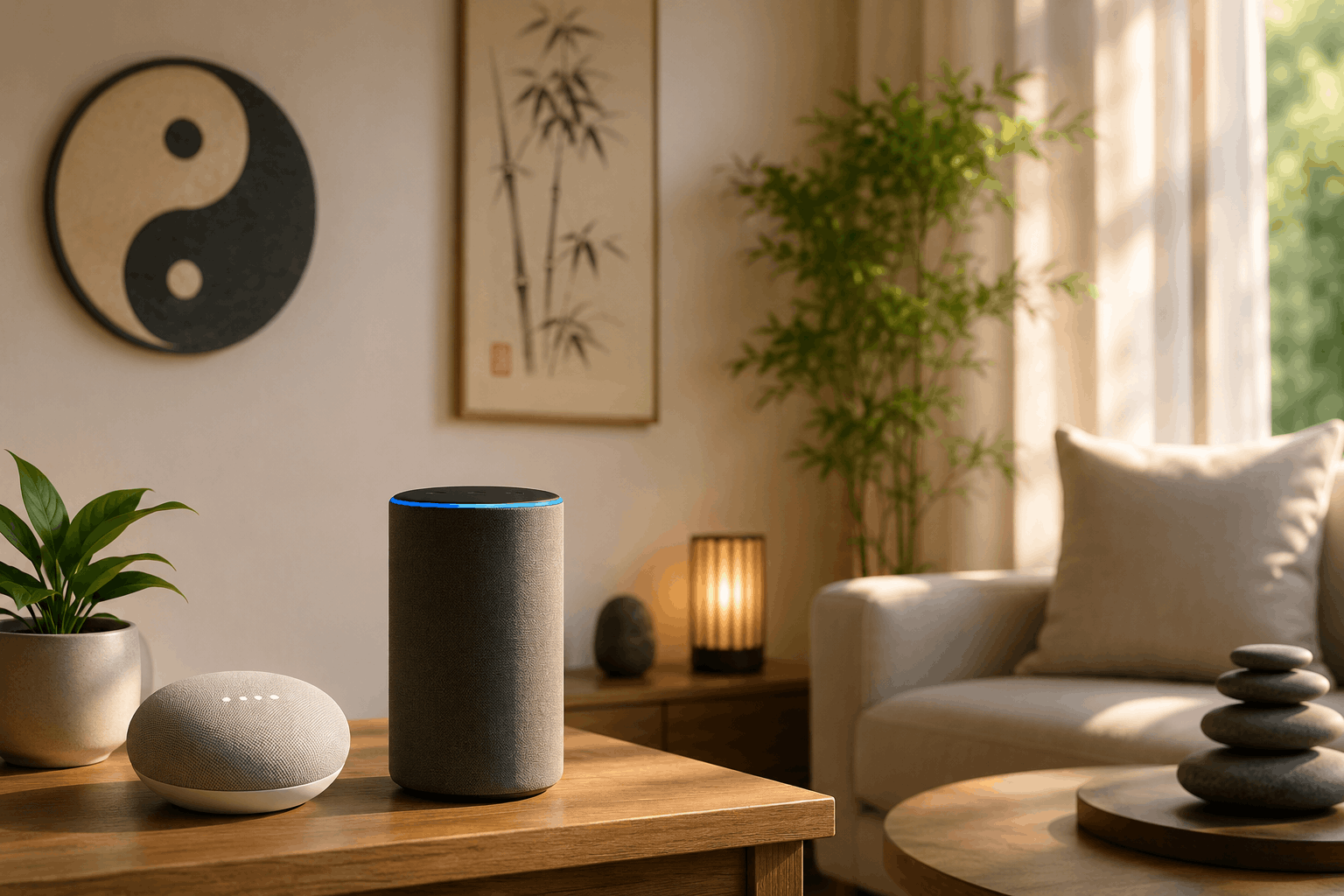
Smart homes are changing the way we live. From Alexa and Google Home to smart lighting, thermostats, security cameras, and automated blinds, technology has made our homes more convenient than ever. But many homeowners wonder whether all these electronic devices affect the flow of positive energy in their homes.
The good news is that Feng Shui doesn’t discourage technology—it encourages balance. By placing smart home devices thoughtfully and avoiding common mistakes, you can enjoy modern convenience while maintaining a peaceful and harmonious living space.
In this guide, I’ll share practical Feng Shui for smart home devices tips, common placement mistakes, and simple ways to create a home that feels both connected and energetically balanced.
Quick Answer
Yes, you can absolutely use smart home devices and still follow Feng Shui principles. Devices like Alexa, Google Home, smart lights, thermostats, and security systems don’t create bad Feng Shui on their own. What matters is where you place them, how many you use, and whether they create clutter or disrupt the natural flow of Chi (energy). A well-organized smart home with balanced technology can improve convenience while supporting a calm, harmonious environment.
What Is Feng Shui for Smart Home Devices?
Modern homes are becoming smarter every year. Voice assistants, automated lighting, smart thermostats, robotic vacuums, security cameras, and wireless hubs make daily life easier. But many homeowners ask whether these technologies affect Feng Shui energy.
Traditional Feng Shui focuses on the movement of Chi (Qi) through your home. Anything that creates clutter, excessive stimulation, or imbalance may interrupt that natural flow.
Smart devices themselves are not considered lucky or unlucky. Instead, how and where you use them determines whether they contribute to a peaceful environment.
During a recent visit to a friend’s newly renovated home, I noticed smart speakers, routers, cameras, and charging stations placed in almost every corner. Although the house looked modern, it felt surprisingly restless. After relocating a few devices, reducing visible cables, and simplifying the bedroom, the entire space immediately felt calmer. That experience reinforced how technology and Feng Shui can work together instead of competing.
Why Technology Affects the Energy of a Home
Although Feng Shui originated centuries before smart technology existed, its principles still apply.
Technology can influence your environment by:
- Creating visual clutter
- Increasing mental stimulation
- Producing constant sounds and alerts
- Filling rooms with unnecessary electronic equipment
- Distracting from relaxation
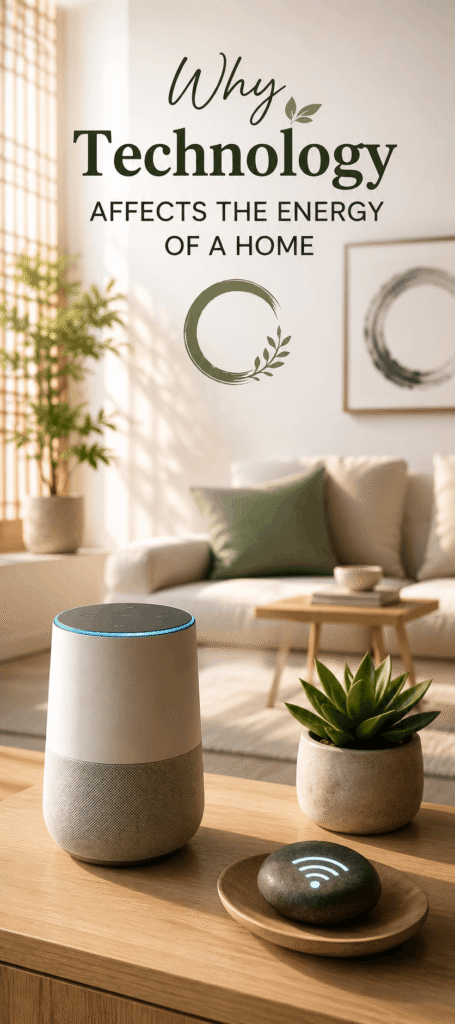
A well-designed smart home should feel peaceful—not overwhelming.
“Good Feng Shui isn’t about avoiding technology. It’s about ensuring technology serves your life instead of controlling your environment.”
Understanding the Five Elements in a Smart Home
Every smart device represents one or more of the Five Feng Shui Elements.
Fire Element
Devices with bright displays, LED lights, and screens increase Fire energy.
Examples:
- Smart TVs
- Tablets
- Digital clocks
- Smart displays
Too much Fire may increase stress, impatience, and restlessness.
Metal Element
Most electronic devices naturally represent Metal.
Examples:
- Smart speakers
- Alexa
- Google Home
- Computers
- Security cameras
Metal supports focus, organization, and efficiency when balanced.
Earth Element
Smart thermostats and climate-control systems help create stability and comfort.
Water Element
Voice assistants that play calming sounds, fountains connected to automation, or devices displaying flowing water imagery may symbolically support the Water element.
Wood Element
Smart grow lights and automated indoor gardens support healthy Wood energy by encouraging plant growth.
Best Placement for Alexa and Google Home
Many people simply place their smart speaker wherever there is an available power outlet.
Instead, consider these Feng Shui guidelines.
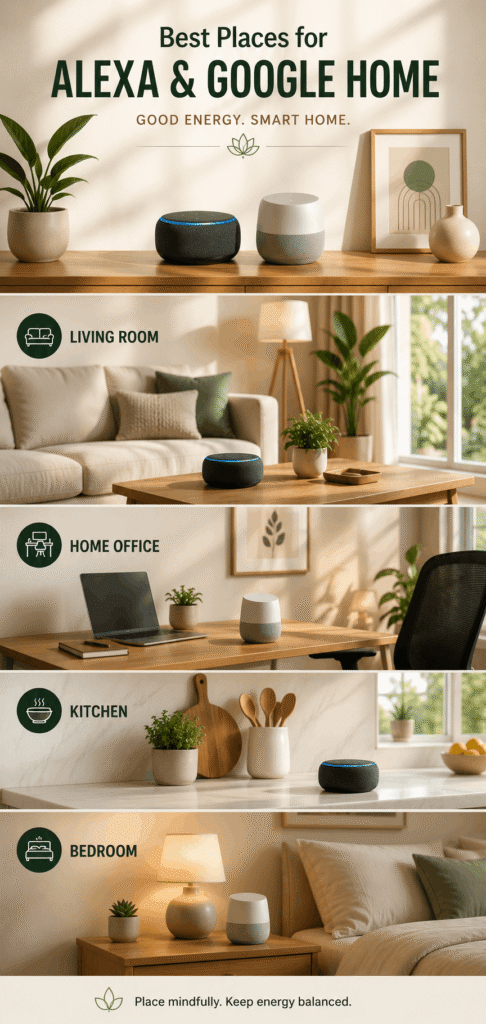
1. Living Room
This is usually the best location.
Benefits include:
- Easy access for the entire family
- Encourages communication
- Supports balanced household energy
Avoid hiding the speaker behind televisions or inside cabinets.
2. Home Office
A smart assistant can improve productivity when positioned neatly on the desk rather than surrounded by tangled cables.
Combine it with your Lucky Direction for even better workspace harmony.
3. Kitchen
Voice-controlled timers, recipes, and shopping lists work well here.
Keep the device away from sinks and excessive heat.
4. Bedroom
This is where many Feng Shui consultants recommend limiting electronics.
If you use Alexa or Google Home for relaxing music or alarms, place it several feet from the bed instead of directly on the nightstand.
Smart Home Devices to Avoid Placing Near the Bed
Bedrooms should encourage rest and emotional balance.
Avoid placing:
- Wi-Fi routers
- Multiple smart hubs
- Charging stations
- Security monitors
- Large digital displays
Reducing electronic clutter creates a calmer sleeping environment (read more on Feng Shui for Screen Time & Sleep Energy).
Common Feng Shui Mistakes with Smart Homes
1. Too Many Visible Wires
Messy cables symbolize blocked energy.
Use cable organizers whenever possible.
2. Smart Devices in Every Room
Not every room needs constant connectivity.
Allow some areas of the home to remain quiet and technology-free.
3. Constant Notifications
Frequent alerts create unnecessary mental stimulation.
Silence non-essential notifications during rest periods.
4. Ignoring Natural Light
Automation should support natural daylight instead of replacing it completely.
Open curtains whenever possible.
5. Filling Every Corner with Electronics
Corners are important energy zones in Feng Shui.
Leave space for plants, artwork, or decorative objects instead of additional gadgets.
Can Smart Lighting Improve Feng Shui?
Absolutely.
Smart lighting is one of the easiest ways to support positive energy.
Beyond creating a comfortable atmosphere, smart home technology can also improve energy efficiency when used thoughtfully. According to the ENERGY STAR Smart Home Tips guide, smart home energy management systems, smart thermostats, and automated controls can help homeowners manage energy use more efficiently while maintaining comfort.
Benefits include:
- Softer evening lighting
- Bright morning routines
- Reduced harsh glare
- Better mood
- Improved comfort
Warm lighting generally creates a more relaxing atmosphere than cool white light during the evening.
Using Automation to Support Positive Energy
Automation can actually strengthen good Feng Shui when used intentionally.
Ideas include:
Morning Routine
- Curtains open automatically
- Gentle lighting turns on
- Relaxing music begins
- Indoor fountain activates
Evening Routine
- Lights dim gradually
- Calm music starts
- Bedroom lights switch to warm tones
- Notifications become silent
These routines help your home transition naturally between active and restful periods.
Best Smart Devices That Complement Feng Shui
Some technology naturally fits a balanced home.
Examples include:
- Smart lighting systems
- Smart blinds
- Air quality monitors
- Smart thermostats
- Indoor gardening systems
- Water feature timers
- Robot vacuums that reduce clutter
Their purpose should always be improving comfort rather than adding unnecessary complexity.
Pair Smart Devices With Feng Shui Tools
Technology becomes even more useful when combined with personalized Feng Shui guidance.
For example:
- Use a Kua Number Calculator to determine your favorable directions.
- Check your workspace with a Lucky Direction Calculator before positioning smart speakers.
- Explore your home’s energy using the Bagua Map Tool.
- Verify room orientation with the Feng Shui Compass Tool.
- Balance your environment using the Five Elements Calculator.
These tools help you make more personalized placement decisions instead of relying on general advice.
My Personal Experience
When I first began incorporating smart technology into my own workspace, convenience quickly turned into clutter. Charging cables, two monitors, smart speakers, and blinking devices filled nearly every surface. Even though everything functioned well, the room never felt peaceful.
I spent an afternoon simplifying the layout, hiding cables, removing devices I rarely used, and repositioning my desk according to my favorable direction. The difference wasn’t dramatic because of one gadget—it was the overall sense of order and intention. Since then, I’ve found that technology works best when it quietly supports daily life instead of constantly demanding attention.
Expert Insight
Interior designers and many modern Feng Shui consultants agree that technology should be integrated thoughtfully rather than eliminated.
The goal is to create a home where convenience enhances comfort while preserving openness, natural light, and a smooth flow of movement.
Frequently Asked Questions
Does Alexa create bad Feng Shui?
No. Alexa itself is not considered bad Feng Shui. Proper placement, reducing clutter, and avoiding excessive electronics in restful areas are more important.
Should Google Home be kept in the bedroom?
It can be used, but many people prefer limiting electronics near the bed to maintain a calmer sleeping environment.
Are smart lights good for Feng Shui?
Yes. Adjustable lighting helps create different moods throughout the day and supports a balanced atmosphere.
Do Wi-Fi routers affect Feng Shui?
From a traditional Feng Shui perspective, routers mainly contribute to visual and electronic clutter. Keeping them organized and away from relaxation spaces is generally recommended.
Can smart homes have good Feng Shui?
Absolutely. A smart home designed with balance, organization, natural light, and thoughtful placement can fully support positive Feng Shui.
Final Thoughts
Feng Shui has always adapted to changing lifestyles. Today’s homes include voice assistants, smart lighting, automated appliances, and connected devices, but the core principle remains unchanged: create a space that feels balanced, comfortable, and supportive.
Instead of avoiding technology, use it intentionally. Keep electronics organized, reduce unnecessary distractions, maintain open spaces, and combine smart devices with personalized Feng Shui tools to build a home that supports both modern convenience and positive energy.